


Skip links

How Smarter Healthcare Software is Transforming Cancer Care Outcomes

Table of Contents

How Smarter Healthcare Software is Transforming Cancer Care Outcomes On World Cancer Day, discussions around cancer care often focus on medical advances, early diagnosis, and patient awareness. While these factors are essential, another powerful element is increasingly shaping outcomes behind the scenes—technology. Cancer care is complex, time-sensitive, and highly coordinated. From diagnosis and treatment planning to follow-ups and long-term monitoring, oncology teams manage large volumes of patient data while working across multiple departments. Yet many hospitals and clinics still rely on manual processes and fragmented systems that slow down care delivery and increase administrative pressure. This is where healthcare software, cancer care technology, and ERP for healthcare are transforming delivery. Smarter systems reduce operational friction, improve coordination, and enable data-driven healthcare decisions. By automating workflows and centralizing information, digital health solutions allow care teams to focus on what matters most—patient outcomes. As cancer cases continue to rise globally, adopting intelligent healthcare technology is no longer optional. It has become a strategic necessity for improving efficiency, safety, and quality across the cancer care journey. The Challenges in Cancer Care Cancer care places significant operational demands on hospitals and clinics, especially when systems are not designed to handle the complexity and scale of the care. Manual Patient Tracking Many oncology departments still depend on spreadsheets, paper files, or partially connected tools to manage appointments, lab results, treatment cycles, and follow-ups. Manual patient tracking increases the risk of missed updates, duplicated work, and longer wait times for patients. In cancer care, even small delays can have serious consequences. Inefficient Treatment Planning Cancer treatment requires close collaboration among oncologists, radiologists, surgeons, pharmacists, nurses, and administrative teams. When systems are disconnected, treatment planning becomes fragmented. Approvals take longer, communication breaks down, and maintaining consistent care timelines becomes challenging. Fragmented Data Systems Patient data is often spread across multiple platforms, including EHRs, laboratory systems, imaging tools, billing software, and pharmacy platforms. Without integration, clinicians spend valuable time searching for information rather than using it to make timely decisions. This fragmentation reduces healthcare efficiency, increases error risk, and adds stress to healthcare teams. Impact on Care Delivery Together, these challenges lead to treatment delays, administrative overload, higher error rates, and staff burnout. Patients experience inconsistent communication and longer wait times, while healthcare teams struggle to deliver care efficiently under growing pressure. How Healthcare Software Makes a Difference Smarter healthcare software addresses these challenges by connecting people, processes, and data into a unified, intelligent care ecosystem. Integrated Patient Records for Coordinated Care A modern patient management system centralizes clinical, administrative, and operational data into a single platform. Oncology teams can access patient history, diagnostic reports, treatment plans, medications, and billing information without switching between systems. This unified view improves coordination, reduces miscommunication, and ensures continuity of care across departments . Automation of Repetitive Administrative Tasks Clinical workflow automation plays a critical role in reducing administrative burden. Tasks such as appointment scheduling, treatment reminders, documentation routing, approvals, and follow-ups can be automated. Automation improves accuracy, speeds up processes, and allows staff to dedicate more time to direct patient care. Real-Time Dashboards for Better Decision-Making With real-time dashboards and analytics, clinicians and administrators gain visibility into patient progress, treatment milestones, and operational bottlenecks. These insights support faster, more informed decisions and enable proactive intervention—key components of effective data-driven healthcare. Benefits for Patients and Healthcare Teams Smarter healthcare software delivers meaningful benefits across the entire cancer care ecosystem, improving outcomes for both patients and the professionals delivering care. Benefits for Patients For cancer patients, time, clarity, and continuity are critical. Faster Diagnosis and Treatment Initiation Integrated systems ensure that lab results, imaging reports, and diagnostic data are available in real time. This reduces delays between diagnosis and treatment planning, helping patients begin therapy sooner. Reduced Errors and Safer Care Centralized records reduce the risk of missing or incorrect information. Clinicians can access a complete, up-to-date patient profile, minimizing medication errors, duplicated tests, and miscommunication. Improved Continuity of Care Healthcare software supports a connected care journey from diagnosis through treatment, follow-ups, and long-term monitoring. Patients experience fewer handoffs and smoother transitions between care stages . Clearer Communication and Engagement Automated reminders, appointment notifications, and follow-up alerts keep patients informed and engaged. Improved communication reduces anxiety, increases adherence to treatment plans, and enhances overall patient experience. Better Overall Outcomes When care is timely, coordinated, and accurate, patients receive more personalized and effective treatment—leading to improved outcomes and quality of life. Benefits for Healthcare Teams Oncology professionals face increasing workloads and administrative pressure. Smarter systems help teams work more efficiently and sustainably. Reduced Administrative Burden Automation eliminates repetitive manual tasks, allowing clinicians, nurses, and administrative staff to focus on patient care rather than paperwork. Improved Collaboration Across Departments Integrated platforms ensure that all teams—clinical and administrative—work from a single source of data. This improves coordination and reduces errors caused by information gaps. Better Decision-Making Through Data Visibility Real-time dashboards provide insights into patient progress, resource utilization, and workflow performance, enabling faster, more confident decisions. Higher Productivity and Efficiency By streamlining workflows and reducing duplication, healthcare software significantly improves operational efficiency without compromising care quality. Lower Burnout and Higher Job Satisfaction When systems support clinical workflows rather than create friction, staff experience less stress and greater job satisfaction, improving retention and team morale. Key Features of Effective Healthcare Software Not all digital health solutions are designed for oncology. Effective healthcare software includes features that support safety, coordination, and scalability. Secure Patient Tracking and Data Management Centralized, secure storage ensures sensitive patient data is protected while remaining accessible to authorized users. Clinical Workflow Automation Automation improves scheduling accuracy, follow-up consistency, documentation flow, and cross-departmental approvals. Data-Driven Decision Support Analytics tools help clinicians identify risks early, monitor treatment effectiveness, and improve care consistency. Reporting and Analytics for Continuous Improvement Reporting tools provide insights into patient throughput, wait times, and operational performance to support continuous improvement. Integration with Existing Hospital Systems Seamless integration with EHRs, lab systems, imaging platforms, pharmacy tools, and billing software ensures smooth workflows and data consistency. Case Study: ERP Transforming Oncology Operations A mid-sized hospital oncology department struggled with rising patient volumes and administrative overload. Patient data was scattered across multiple systems, making scheduling, follow-ups, and coordination inefficient. After implementing an ERP solution for healthcare, the hospital centralized patient data and automated key workflows. Scheduling, treatment tracking, and follow-ups were managed through a unified dashboard accessible to all relevant teams. Within six months, the hospital reduced patient administration time by 30 percent, improved care coordination, and shortened patient wait times. Staff satisfaction increased, and patients experienced smoother, more predictable care journeys. Conclusion Cancer care outcomes depend not only on clinical expertise but also on the systems that support care delivery. Manual workflows, fragmented data, and administrative inefficiencies create barriers that slow treatment and strain healthcare teams . Smarter healthcare software, combined with ERP for healthcare, addresses these challenges by improving coordination, automating workflows, and enabling data-driven decision-making. The takeaway is clear: ERP + healthcare software = smarter workflows, faster treatment, safer care, and better cancer care outcomes. Healthcare organizations that invest in intelligent cancer care technology today will be better positioned to deliver high-quality, patient-centered care in the future. 💡 Discover How Everite Solutions’ Healthcare Software Can Transform Patient Care Everite Solutions delivers intelligent healthcare software and ERP solutions designed to meet the complex needs of cancer care providers. From workflow automation to analytics-driven insights, Everite helps healthcare organizations improve efficiency, coordination, and patient outcomes. Contact Everite Solutions today to explore a smarter, technology-driven approach to cancer care. Primary Keywords Healthcare software Secondary Keywords Patient management system Digital health solutions Clinical workflow automation Healthcare efficiency Data-driven healthcare Seo tags Healthcare Technology Cancer Care Software Oncology Operations Healthcare ERP Digital Health Solutions Clinical Workflow Automation Patient-Centered Care Data-Driven Healthcare
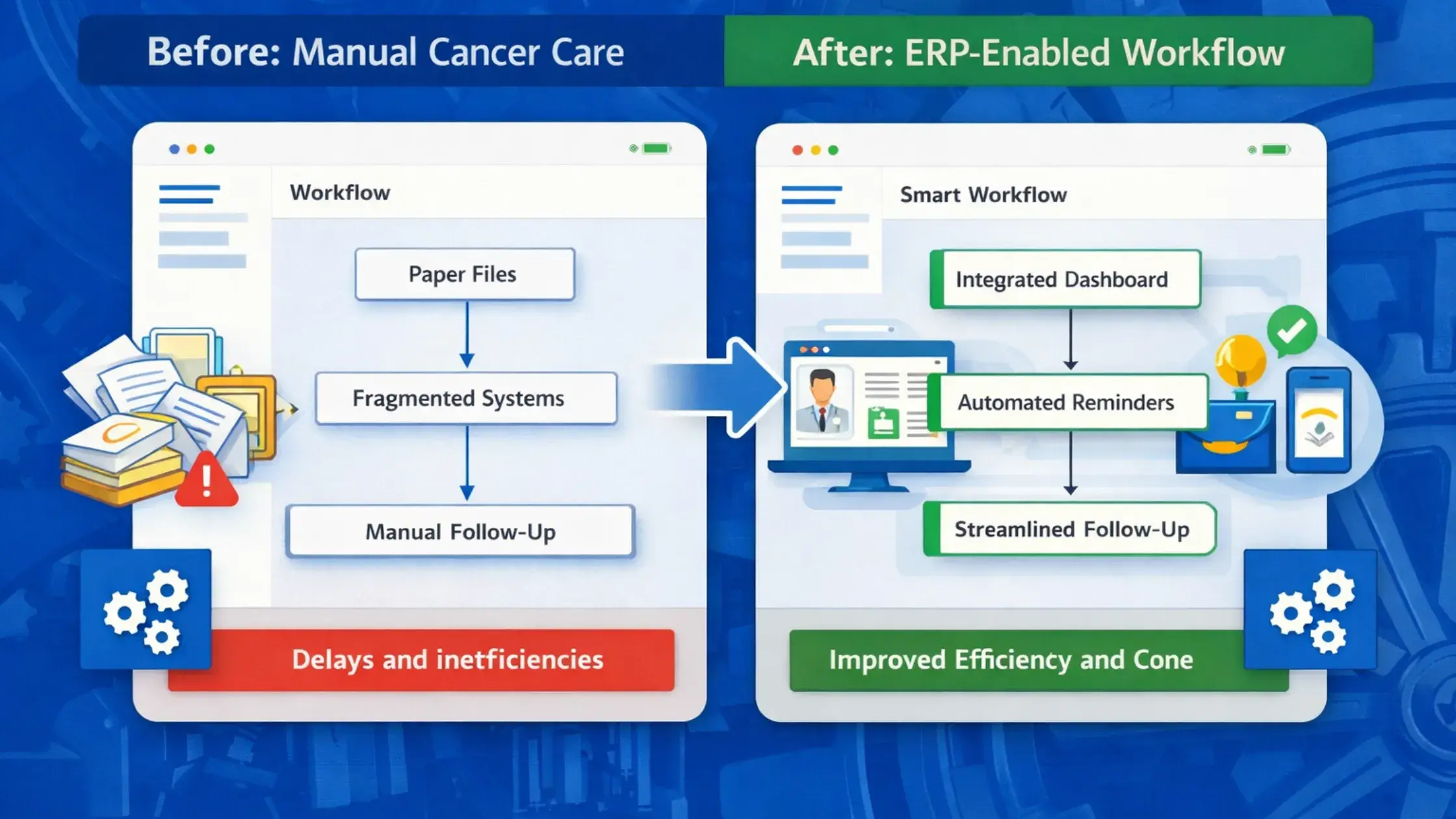
Table of Contents

On World Cancer Day, discussions around cancer care often focus on medical advances, early diagnosis, and patient awareness. While these factors are essential, another powerful element is increasingly shaping outcomes behind the scenes—technology.

Cancer care is complex, time-sensitive, and highly coordinated. From diagnosis and treatment planning to follow-ups and long-term monitoring, oncology teams manage large volumes of patient data while working across multiple departments. Yet many hospitals and clinics still rely on manual processes and fragmented systems that slow down care delivery and increase administrative pressure.

This is where healthcare software, cancer care technology, and ERP for healthcare are transforming delivery. Smarter systems reduce operational friction, improve coordination, and enable data-driven healthcare decisions. By automating workflows and centralizing information, digital health solutions allow care teams to focus on what matters most—patient outcomes.

As cancer cases continue to rise globally, adopting intelligent healthcare technology is no longer optional. It has become a strategic necessity for improving efficiency, safety, and quality across the cancer care journey.

The Challenges in Cancer Care

The Challenges in Cancer Care

Cancer care places significant operational demands on hospitals and clinics, especially when systems are not designed to handle the complexity and scale of the care.

Manual Patient Tracking

Many oncology departments still depend on spreadsheets, paper files, or partially connected tools to manage appointments, lab results, treatment cycles, and follow-ups. Manual patient tracking increases the risk of missed updates, duplicated work, and longer wait times for patients. In cancer care, even small delays can have serious consequences.

Inefficient Treatment Planning

Cancer treatment requires close collaboration among oncologists, radiologists, surgeons, pharmacists, nurses, and administrative teams. When systems are disconnected, treatment planning becomes fragmented. Approvals take longer, communication breaks down, and maintaining consistent care timelines becomes challenging.

Fragmented Data Systems

Patient data is often spread across multiple platforms, including EHRs, laboratory systems, imaging tools, billing software, and pharmacy platforms. Without integration, clinicians spend valuable time searching for information rather than using it to make timely decisions. This fragmentation reduces healthcare efficiency, increases error risk, and adds stress to healthcare teams.

Impact on Care Delivery

Together, these challenges lead to treatment delays, administrative overload, higher error rates, and staff burnout. Patients experience inconsistent communication and longer wait times, while healthcare teams struggle to deliver care efficiently under growing pressure.

How Healthcare Software Makes a Difference

Smarter healthcare software addresses these challenges by connecting people, processes, and data into a unified, intelligent care ecosystem.

Integrated Patient Records for Coordinated Care

A modern patient management system centralizes clinical, administrative, and operational data into a single platform. Oncology teams can access patient history, diagnostic reports, treatment plans, medications, and billing information without switching between systems. This unified view improves coordination, reduces miscommunication, and ensures continuity of care across departments

Automation of Repetitive Administrative Tasks

Clinical workflow automation plays a critical role in reducing administrative burden. Tasks such as appointment scheduling, treatment reminders, documentation routing, approvals, and follow-ups can be automated. Automation improves accuracy, speeds up processes, and allows staff to dedicate more time to direct patient care.

Real-Time Dashboards for Better Decision-Making

With real-time dashboards and analytics, clinicians and administrators gain visibility into patient progress, treatment milestones, and operational bottlenecks. These insights support faster, more informed decisions and enable proactive intervention—key components of effective data-driven healthcare.

Benefits for Patients and Healthcare Teams

Smarter healthcare software delivers meaningful benefits across the entire cancer care ecosystem, improving outcomes for both patients and the professionals delivering care.

Benefits for Patients

For cancer patients, time, clarity, and continuity are critical.

Faster Diagnosis and Treatment Initiation

Integrated systems ensure that lab results, imaging reports, and diagnostic data are available in real time. This reduces delays between diagnosis and treatment planning, helping patients begin therapy sooner.

Reduced Errors and Safer Care

Centralized records reduce the risk of missing or incorrect information. Clinicians can access a complete, up-to-date patient profile, minimizing medication errors, duplicated tests, and miscommunication.

Improved Continuity of Care

Healthcare software supports a connected care journey from diagnosis through treatment, follow-ups, and long-term monitoring. Patients experience fewer handoffs and smoother transitions between care stages

Clearer Communication and Engagement

Automated reminders, appointment notifications, and follow-up alerts keep patients informed and engaged. Improved communication reduces anxiety, increases adherence to treatment plans, and enhances overall patient experience.

Better Overall Outcomes

When care is timely, coordinated, and accurate, patients receive more personalized and effective treatment—leading to improved outcomes and quality of life.

Benefits for Healthcare Teams

Oncology professionals face increasing workloads and administrative pressure. Smarter systems help teams work more efficiently and sustainably.

Reduced Administrative Burden

Automation eliminates repetitive manual tasks, allowing clinicians, nurses, and administrative staff to focus on patient care rather than paperwork.

Improved Collaboration Across Departments

Integrated platforms ensure that all teams—clinical and administrative—work from a single source of data. This improves coordination and reduces errors caused by information gaps.

Better Decision-Making Through Data Visibility

Real-time dashboards provide insights into patient progress, resource utilization, and workflow performance, enabling faster, more confident decisions.

Higher Productivity and Efficiency

By streamlining workflows and reducing duplication, healthcare software significantly improves operational efficiency without compromising care quality.

Lower Burnout and Higher Job Satisfaction

When systems support clinical workflows rather than create friction, staff experience less stress and greater job satisfaction, improving retention and team morale.

Key Features of Effective Healthcare Software

Not all digital health solutions are designed for oncology. Effective healthcare software includes features that support safety, coordination, and scalability.

Secure Patient Tracking and Data Management

Centralized, secure storage ensures sensitive patient data is protected while remaining accessible to authorized users.

Clinical Workflow Automation

Automation improves scheduling accuracy, follow-up consistency, documentation flow, and cross-departmental approvals.

Data-Driven Decision Support

Analytics tools help clinicians identify risks early, monitor treatment effectiveness, and improve care consistency.

Reporting and Analytics for Continuous Improvement

Reporting tools provide insights into patient throughput, wait times, and operational performance to support continuous improvement.

Integration with Existing Hospital Systems

Seamless integration with EHRs, lab systems, imaging platforms, pharmacy tools, and billing software ensures smooth workflows and data consistency.

Case Study: ERP Transforming Oncology Operations

A mid-sized hospital oncology department struggled with rising patient volumes and administrative overload. Patient data was scattered across multiple systems, making scheduling, follow-ups, and coordination inefficient.

After implementing an ERP solution for healthcare, the hospital centralized patient data and automated key workflows. Scheduling, treatment tracking, and follow-ups were managed through a unified dashboard accessible to all relevant teams.

Within six months, the hospital reduced patient administration time by 30 percent, improved care coordination, and shortened patient wait times. Staff satisfaction increased, and patients experienced smoother, more predictable care journeys.

Conclusion 

Cancer care outcomes depend not only on clinical expertise but also on the systems that support care delivery. Manual workflows, fragmented data, and administrative inefficiencies create barriers that slow treatment and strain healthcare teams

Smarter healthcare software, combined with ERP for healthcare, addresses these challenges by improving coordination, automating workflows, and enabling data-driven decision-making.

The takeaway is clear:

ERP + healthcare software = smarter workflows, faster treatment, safer care, and better cancer care outcomes.

Healthcare organizations that invest in intelligent cancer care technology today will be better positioned to deliver high-quality, patient-centered care in the future.

💡 Discover How Everite Solutions’ Healthcare Software Can Transform Patient Care

Everite Solutions delivers intelligent healthcare software and ERP solutions designed to meet the complex needs of cancer care providers. From workflow automation to analytics-driven insights, Everite helps healthcare organizations improve efficiency, coordination, and patient outcomes.

Contact Everite Solutions today to explore a smarter, technology-driven approach to cancer care.

Categories
 
Everite Solutions Logo

Want to Build a High-Impact App?

Download our free guide: 10 Must-Have Features for a Successful Business App